
Truckpartsmart
Truckpartsmart
Truckpartsmart
A story of building a go-to-market strategy and brand identity for a startup marketplace.
A story of building a go-to-market strategy and brand identity for a startup marketplace.
A story of building a go-to-market strategy and brand identity for a startup marketplace.

Problem
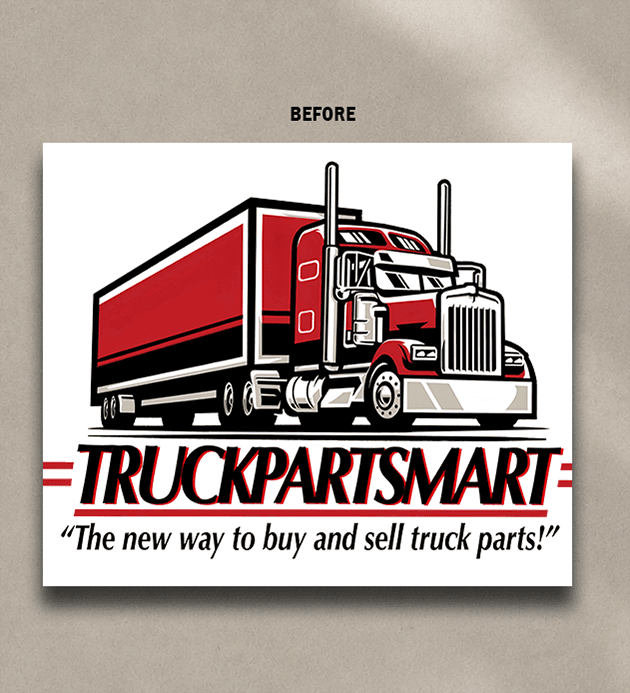
The project began as a request to refine the existing logo and create social media posts. TruckPartSmart was preparing to launch a marketplace for buying and selling heavy-duty truck parts, but the brand lacked a clear identity and go-to-market strategy beyond the belief that if the app was the best on the market, people would naturally find it. The brand strategy had yet to be defined—from its visual identity and voice to how customers would discover it and why they would choose it over established competitors.
The project began as a request to refine the existing logo and create social media posts. TruckPartSmart was preparing to launch a marketplace for buying and selling heavy-duty truck parts, but the brand lacked a clear identity and go-to-market strategy beyond the belief that if the app was the best on the market, people would naturally find it. The brand strategy had yet to be defined—from its visual identity and voice to how customers would discover it and why they would choose it over established competitors.
The project began as a request to refine the existing logo and create social media posts. TruckPartSmart was preparing to launch a marketplace for buying and selling heavy-duty truck parts, but the brand lacked a clear identity and go-to-market strategy beyond the belief that if the app was the best on the market, people would naturally find it. The brand strategy had yet to be defined—from its visual identity and voice to how customers would discover it and why they would choose it over established competitors.
Approach
Knowing how important brand identity is to marketing, I recommended changing our workflow to first define the business and understand the competitive landscape before launching.
The project team included the owner, investors, the web development project lead, the SEO team, and myself as the Brand & Marketing Strategy Consultant.
I began by creating competitive comparison charts and visual analyses to identify gaps in the market and present strategic opportunities to the ownership team. I researched how competitors positioned themselves, communicated with customers, built trust, and engaged their audiences across their websites, social media, and overall digital presence.
From there, I guided the team through multiple brand directions, exploring different visual identities, color palettes, typography, imagery, and brand voices. The goal wasn't simply to choose a logo—it was to help stakeholders understand how positioning, messaging, and visual identity work together to shape perception, then align those decisions with their long-term vision for the business.
Knowing how important brand identity is to marketing, I recommended changing our workflow to first define the business and understand the competitive landscape before launching.
The project team included the owner, investors, the web development project lead, the SEO team, and myself as the Brand & Marketing Strategy Consultant.
I began by creating competitive comparison charts and visual analyses to identify gaps in the market and present strategic opportunities to the ownership team. I researched how competitors positioned themselves, communicated with customers, built trust, and engaged their audiences across their websites, social media, and overall digital presence.
From there, I guided the team through multiple brand directions, exploring different visual identities, color palettes, typography, imagery, and brand voices. The goal wasn't simply to choose a logo—it was to help stakeholders understand how positioning, messaging, and visual identity work together to shape perception, then align those decisions with their long-term vision for the business.
Knowing how important brand identity is to marketing, I recommended changing our workflow to first define the business and understand the competitive landscape before launching.
The project team included the owner, investors, the web development project lead, the SEO team, and myself as the Brand & Marketing Strategy Consultant.
I began by creating competitive comparison charts and visual analyses to identify gaps in the market and present strategic opportunities to the ownership team. I researched how competitors positioned themselves, communicated with customers, built trust, and engaged their audiences across their websites, social media, and overall digital presence.
From there, I guided the team through multiple brand directions, exploring different visual identities, color palettes, typography, imagery, and brand voices. The goal wasn't simply to choose a logo—it was to help stakeholders understand how positioning, messaging, and visual identity work together to shape perception, then align those decisions with their long-term vision for the business.


Execution
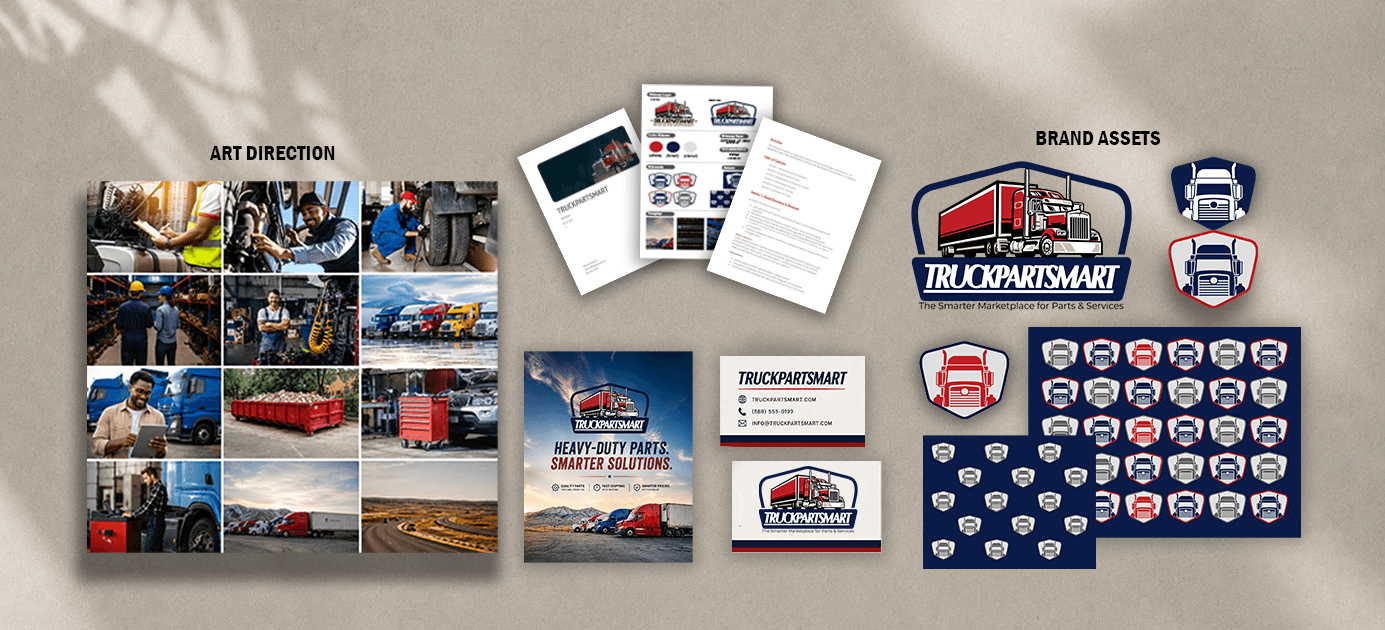
The original scope focused on a revised logo, digital assets, and a foundational social media presence. I found that social engagement was consistently low across the industry- educational YouTube content and community-driven resources generated stronger engagement. I shifted the strategy toward call to action/forward approaches in the avenues the field was using that was working for the competitors.
Referral incentives, promotions, and first-users marketplace promotions
A "Join Our Network" campaign featuring customer stories, industry conversations, job opportunities, and parts requests to build an engaged community. Content strategy is give the users benefits to stay engaged help them
Active outreach through forums, Reddit, Facebook, Instagram, and other industry channels to drive awareness and app traffic.
QR code business cards for promotion through the co-founder's shop, truck stops, mechanics, and future trade shows. Including magnets to put on truck doors at truck stops.
Partnership outreach with local shops and vendors.
Ownership representation at truck expos to expand the app's network.
The original scope focused on a revised logo, digital assets, and a foundational social media presence. I found that social engagement was consistently low across the industry- educational YouTube content and community-driven resources generated stronger engagement. I shifted the strategy toward call to action/forward approaches in the avenues the field was using that was working for the competitors.
Referral incentives, promotions, and first-users marketplace promotions
A "Join Our Network" campaign featuring customer stories, industry conversations, job opportunities, and parts requests to build an engaged community. Content strategy is give the users benefits to stay engaged help them
Active outreach through forums, Reddit, Facebook, Instagram, and other industry channels to drive awareness and app traffic.
QR code business cards for promotion through the co-founder's shop, truck stops, mechanics, and future trade shows. Including magnets to put on truck doors at truck stops.
Partnership outreach with local shops and vendors.
Ownership representation at truck expos to expand the app's network.
The original scope focused on a revised logo, digital assets, and a foundational social media presence. I found that social engagement was consistently low across the industry- educational YouTube content and community-driven resources generated stronger engagement. I shifted the strategy toward call to action/forward approaches in the avenues the field was using that was working for the competitors.
Referral incentives, promotions, and first-users marketplace promotions
A "Join Our Network" campaign featuring customer stories, industry conversations, job opportunities, and parts requests to build an engaged community. Content strategy is give the users benefits to stay engaged help them
Active outreach through forums, Reddit, Facebook, Instagram, and other industry channels to drive awareness and app traffic.
QR code business cards for promotion through the co-founder's shop, truck stops, mechanics, and future trade shows. Including magnets to put on truck doors at truck stops.
Partnership outreach with local shops and vendors.
Ownership representation at truck expos to expand the app's network.
Outcome
As a new marketplace entering an established industry, TruckPartSmart needed to build credibility before launch. Beyond developing the app, the founders needed a cohesive brand identity, clear positioning, and a marketing strategy that would differentiate the platform, attract both buyers and sellers, and exude confidence and clarity in a saturated market.
As a new marketplace entering an established industry, TruckPartSmart needed to build credibility before launch. Beyond developing the app, the founders needed a cohesive brand identity, clear positioning, and a marketing strategy that would differentiate the platform, attract both buyers and sellers, and exude confidence and clarity in a saturated market.
As a new marketplace entering an established industry, TruckPartSmart needed to build credibility before launch. Beyond developing the app, the founders needed a cohesive brand identity, clear positioning, and a marketing strategy that would differentiate the platform, attract both buyers and sellers, and exude confidence and clarity in a saturated market.